
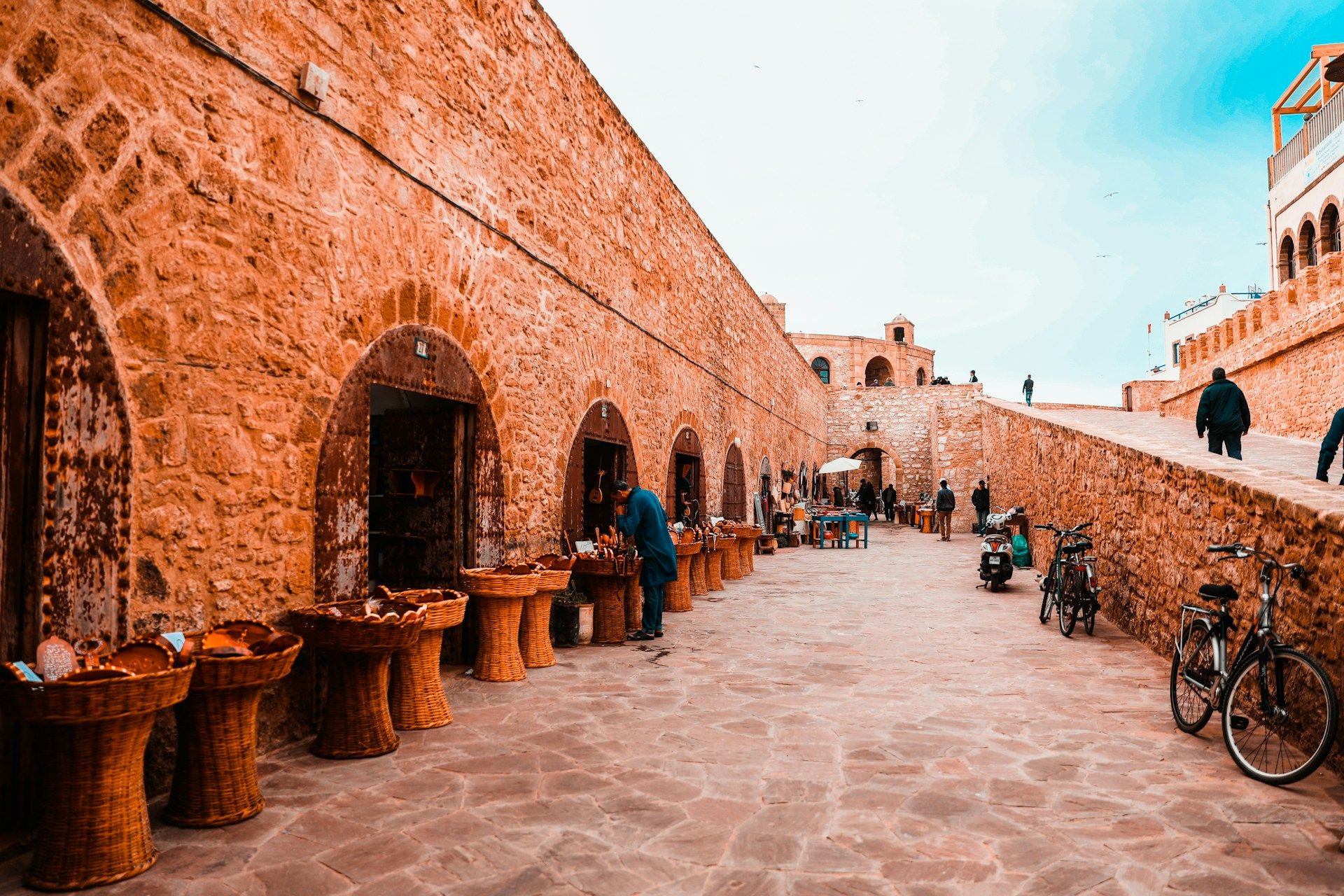
Although the Essaouira region was inhabited intermittently from Antiquity by the Phoenicians, by the Gaetulians during the reign of Juba II and then by the Romans, it was only from the 16th century that the site was truly occupied by the Portuguese, who built a fortress, the Castelo Real, in 1506, and ramparts that were quickly abandoned in the face of the fierce resistance of the local population.
The founding of the city of Essaouira itself will be the work ofsultan Mohammed ben Abdallah, which is launching its construction from1760and conducted an original experiment by entrusting this project to several renowned architects, notablyTheodore Cornutwho drew up the city plan, tasked with building a city adapted to the needs of foreign merchants. Once built, it grew steadily, experiencing a golden age and exceptional development, becoming the country's most important commercial port and its diplomatic capital between the late 18th and first half of the 19th centuries. It also became a citymulticultural And artistic.
Toponymy
Essaouira has several names, but most remain uncertain and their etymologies speculative. It is possible that the Phoenician trading post on the Purpuraires Islands is the "Arambys" mentioned around the 5th century BC by the explorer Hanno, taking its name from a Phoenician root Har Anbin, which means "mountain of grapes"[2], but some authors think that it could rather be "Cerné" (or Kerne), the island whose discovery concludes the explorer's first voyage, a hypothesis however widely contested given the number of candidate sites[3].